
Articles
All articles
 Longevity
SS-31 (Elamipretide): The Mitochondria-Targeting Peptide
SS-31 is a research peptide that aims to protect the cell’s power plants by binding to cardiolipin in the inner mitochondrial membrane. A pioneer of mitochondrial longevity science.
 Body Recomposition
IGF-1 LR3: The Long-Acting Growth-Factor Analog
IGF-1 LR3 is an engineered analog of natural IGF-1 with a much longer duration of action. Why was it developed, how does it work, and what risks does it carry?
 Longevity
HGH (Growth Hormone): In the Context of Longevity
Human growth hormone sits at the center of debates on metabolism, tissue repair and aging. Its benefits, risks and the "is more better?" paradox.
 Recovery
TB-500: Thymosin Beta-4 and Cell Migration
A Thymosin Beta-4 derivative, TB-500 is a recovery compound studied in actin binding, cell migration and tissue-flexibility research. How does it compare with BPC-157?
 Recovery
BPC-157: The Peptide of Tissue-Repair Research
Derived from a gastric protective protein, BPC-157 is one of the most-studied research peptides in tendon, ligament and muscle-repair literature. The scientific framework.
 Longevity
MOTS-c: The Longevity Signal From the Mitochondria
Encoded by mitochondrial DNA, MOTS-c is at the center of longevity research as an "exercise mimetic" that governs metabolism and cellular energy balance.
 Anti-Aging
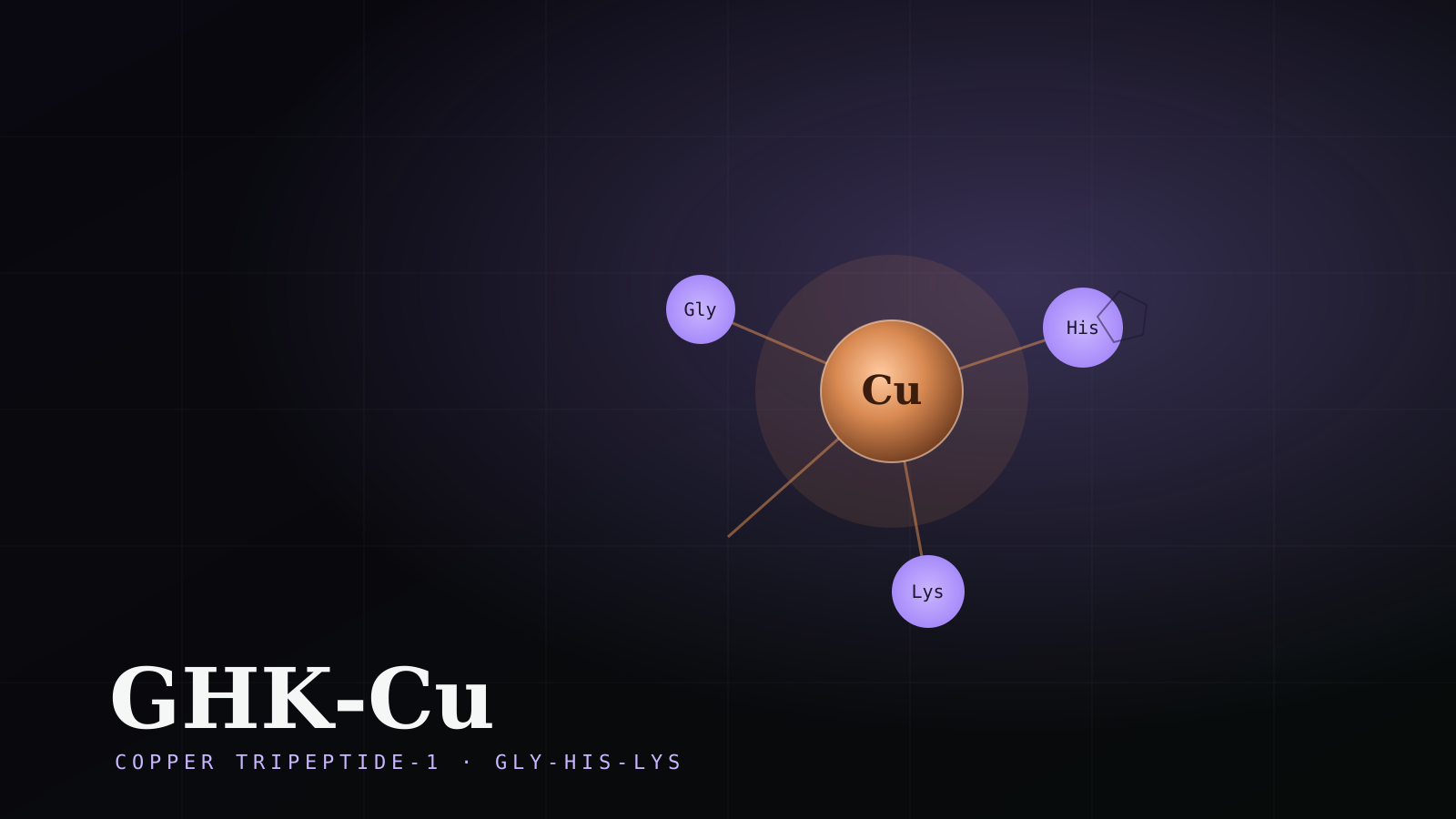
GHK-Cu: The Copper Peptide and Skin Renewal
A natural copper tripeptide, GHK-Cu is a favorite of anti-aging research for its role in collagen synthesis and tissue repair. The science behind the molecule.
 Body Recomposition
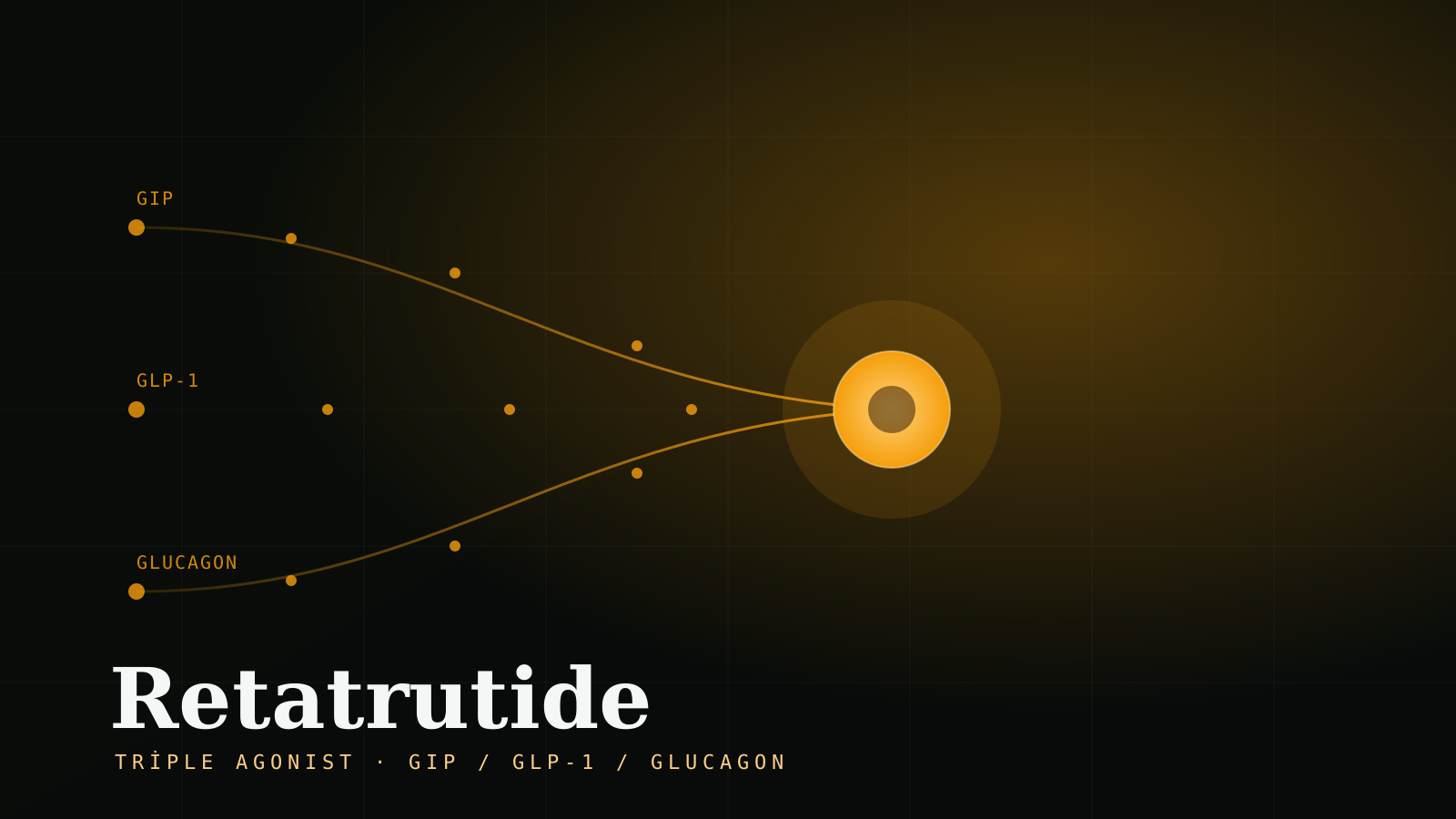
Retatrutide: The Next-Generation Tri-Agonist Peptide
Targeting GIP, GLP-1 and glucagon receptors in a single molecule, retatrutide is the most-discussed candidate in weight-management research. How does it work, and what does the science say?