
SS-31 (Elamipretide): The Mitochondria-Targeting Peptide
SS-31 is a research peptide that aims to protect the cell’s power plants by binding to cardiolipin in the inner mitochondrial membrane. A pioneer of mitochondrial longevity science.
By · Peptid Mühendisi
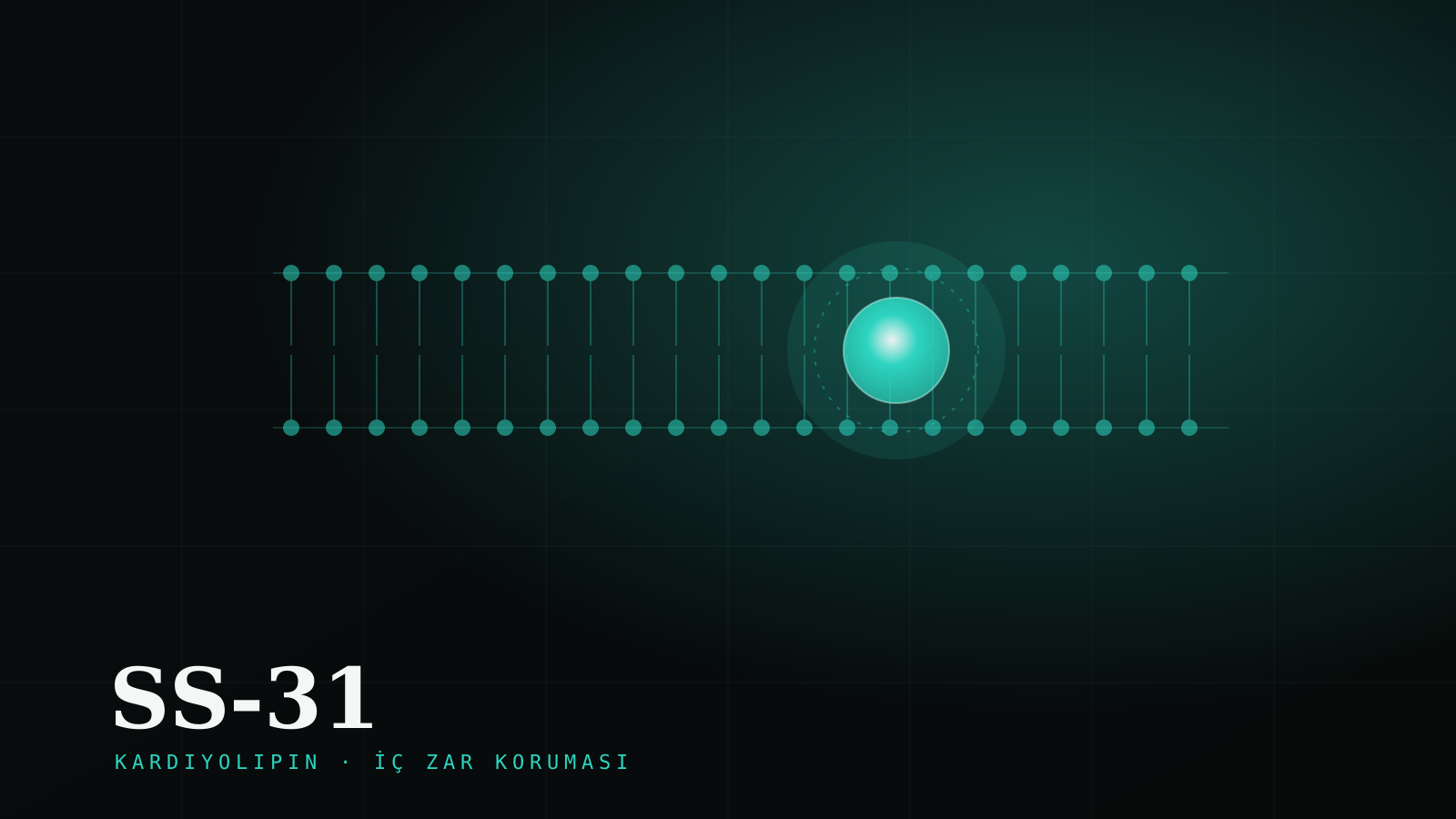
What Is SS-31?
SS-31 (also known as elamipretide) is a small, four-amino-acid peptide from the Szeto-Schiller family. What makes it special is that it directly targets the mitochondria, the cell’s power plants. Thanks to its aromatic-cationic structure, it selectively accumulates in the inner mitochondrial membrane.
The Cardiolipin Target
The inner mitochondrial membrane contains a special lipid called cardiolipin, which is critical for the correct arrangement of the proteins responsible for energy production (the electron transport chain). With aging and disease, cardiolipin degrades, mitochondria begin to “leak,” and harmful free radicals (ROS) increase.
By binding to cardiolipin, SS-31:
- Preserves the structural integrity of the inner membrane (its cristae folds),
- Improves the efficiency of the electron transport chain,
- Supports ATP production (cellular energy),
- Reduces excessive ROS production.
Research Areas
- Mitochondrial diseases — clinical trials have been conducted in rare diseases such as Barth syndrome and primary mitochondrial myopathy.
- Heart failure and ischemia-reperfusion injury.
- Aging biology — findings that it improves muscle and heart function in aged animal models have placed SS-31 at the center of mitochondrial longevity research.
Clinical trial results are mixed; some indications show promise while others show limited effect. This reflects the complexity of mitochondrial dysfunction.
Safety and Limitations
SS-31/elamipretide is in clinical research and has no widely approved use. The most frequently reported effects are injection-site reactions. This content is for informational purposes only and is not a substitute for medical advice.
Related reading
 Longevity
HGH (Growth Hormone): In the Context of Longevity
Human growth hormone sits at the center of debates on metabolism, tissue repair and aging. Its benefits, risks and the "is more better?" paradox.
 Longevity
MOTS-c: The Longevity Signal From the Mitochondria
Encoded by mitochondrial DNA, MOTS-c is at the center of longevity research as an "exercise mimetic" that governs metabolism and cellular energy balance.